Author: A/MCP

  • Key learnings for streaming live meetings with remote audiences

    Key learnings for streaming live meetings with remote audiences

    Providing live broadcast services is just one part of the job as a technical director. The secret sauce lies in creating opportunities for interaction between the remote and on-site audience. That comes from key learnings for streaming live meetings with remote audiences. As a technical director, it is essential to not only ensure smooth live broadcasting but also facilitate engagement and interaction among attendees, regardless of their physical location.

    Enhance the overall viewer experience for streaming live meetings

    By leveraging the latest technology and incorporating innovative strategies, technical directors can enhance the overall viewer experience and make remote participants feel more connected to the event. This includes incorporating interactive elements such as live polling, Q&A sessions, and virtual networking opportunities. Through these efforts, technical directors play a crucial role in bridging the gap between remote and on-site attendees, creating an inclusive and dynamic experience for all.

    To excel in this role, technical directors must continuously stay updated with the latest trends and best practices in remote live streaming, adapt to new technologies, and think creatively to deliver an immersive and engaging event experience.

    Make room for improvement

    I have been providing streaming services for almost a decade now. Yes, you read that right. That means I have seen a lot of technical changes with audience adaptation to this type of experience. However there is still room for improvement.

    Those first years required a lot of trouble shooting and experimentation in terms of the technology needed. It was pretty much a one-way street in terms of interactivity between the remote and live audience. Obviously things have greatly improved in a few short years due to the consequences of the pandemic with more events and interactions being done remotely. We all know how to Zoom!
    streaming live meetings
    Key learnings for streaming live meetings with remote audiences (2021)

    Nine Key Learnings for streaming live meetings with remote audiences

    I am going to touch on the key learnings from streaming live meetings to both remote and on-site audiences. This approach can also cover the same for any type of meeting, from national businesses, non-profits, creative agencies, educational, ecclesiastical, worship, and local small businesses. These key learnings can be shared with a client in the preparation or demonstrated during the live event itself. Please add your own into the comments below.

    #1 – Key learning is to acknowledge your remote audience even if you don’t see them directly. There is a camera pointed at you. Talk to them directly. Let them know you appreciate them being there and how you will engage with them through the session.

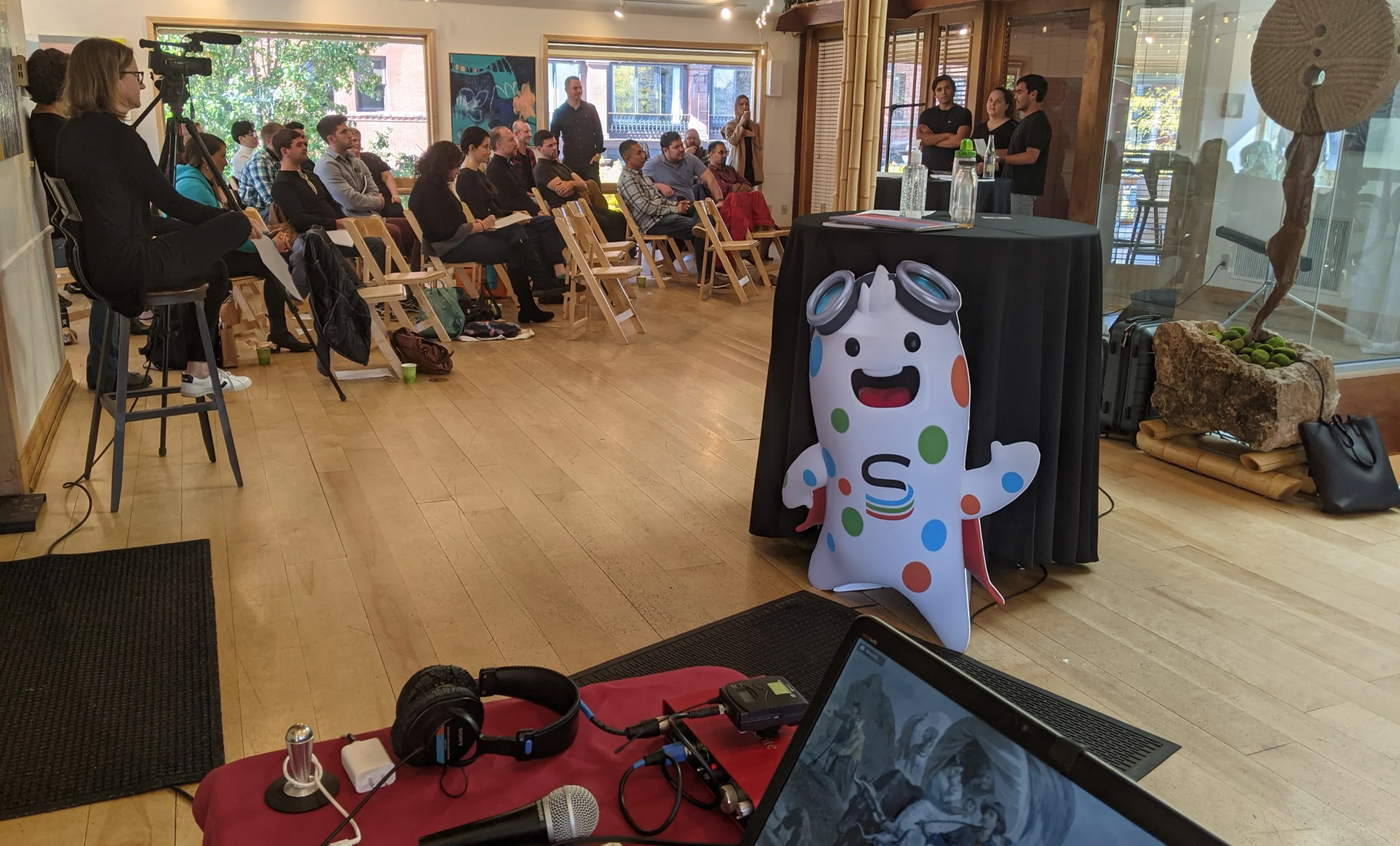
    #2 – Bring your remote audience into the live room via a projection of their gallery view on a large enough screen that the live audience can see them clearly. Ask questions and broadcast their audio response back to room. Make sure you have the equipment setup to do this.

    #3 – Curate the remote chat for technical questions and concerns. I like to use the remote audience as a live meter to check on the quality of the audio and video. I am directing this meeting for them. Asking them via chat if the audio is working, let’s them know you care about their experience. They will inform me if something goes amiss. I also monitor the session as a participant on another device.

    #4 – Ask for a third party from the client side to monitor and curate the chat to respond to questions and to mirror live and remote activities. This key person can also be remote.

    #5 – Engage the remote audience with active camera shots, medium and close-up shots work great with speakers, wide and panning shots of the room help to engage the remote audience with their counter parts. That is a key part of your job for the audience live and remote.

    Final Key learnings for streaming live meetings

    #6 – Live presenters have a tendency to leave their shared screen presentation on longer than needed especially when answering questions. I like to switch to a live feed of the room, to help bring the remote audience back into experience instead of just being passive listeners.

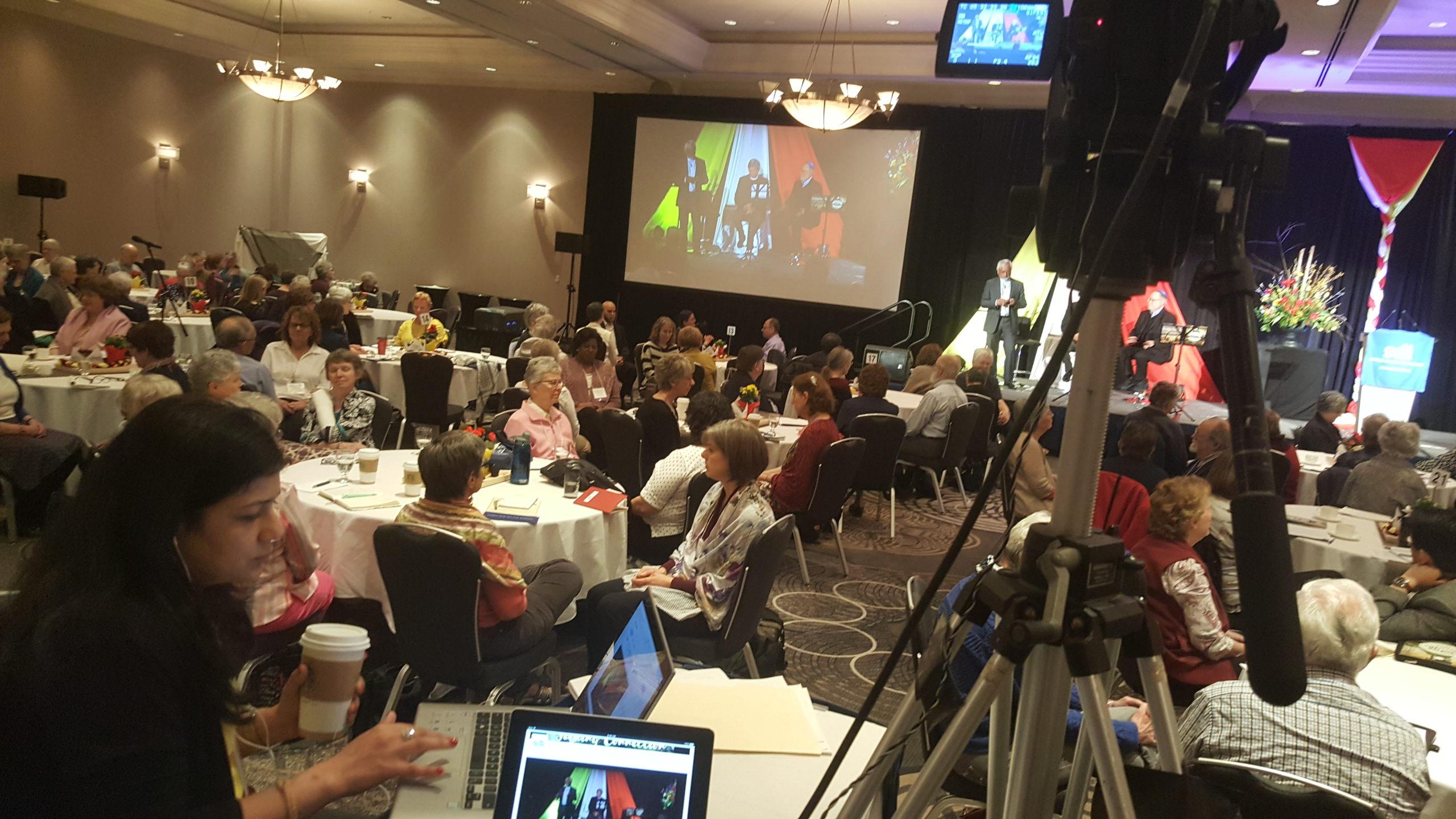
    #7 – Large screens behind the live presenters are compelling for the audience too, especially if your streaming broadcast is also being projected there. That can be the same feed that your remote audience is seeing.

    #8 – Key Learnings for streaming live meetings to remote audiences. Don’t leave your remote audience unable to hear something from the live meeting. I always run room audio from the camera, and if there is a PA system in place, a XLR cable out to my mixer. If not, perhaps the client doesn’t provide a PA system, make sure the presenter is providing direct audio to your remote audience through a wireless or cable mic.

    #9 – Make sure to thank the remote audience at the end of the live meeting for joining, and leave the camera feed on as the audience leaves. People love to watch other people.

    Technical Director Conclusion

    Following these key learnings for streaming live meetings with remote audiences will make any online meeting into something memorable and valuable to all the participants. Please reach out if you need any help with your own event.

  • Rising Above Adversity: My Personal Encounter with Scott Rudin

    Rising Above Adversity: My Personal Encounter with Scott Rudin

    My Journey Through ‘Jennifer 8’

    The influence and impact of Scott Rudin, a prominent figure in the entertainment industry, cannot be understated. Numerous accounts have emerged, as highlighted in “Everyone Just Knows He’s an Absolute Monster: Scott Rudin’s Ex-Staffers Speak Out on Abusive Behavior” published by The Hollywood Reporter on April 7, 2021. Interestingly, my own personal experience with Scott Rudin dates back three decades. It was during Labor Day Weekend in 1991 when I held the position of Director’s Assistant at Paramount Studios, working alongside the esteemed Academy Award-nominated Director-Writer, Bruce Robinson, known for his notable works such as “The Killing Fields” and “With Nail and I.” Our collaborative project at the time was the chilling serial-killer thriller titled “Jennifer 8,” slated for release in 1992.

    In the midst of the creative process, I became acquainted with the darker side of Scott Rudin’s reputation for the first time. His notorious behavior, as recounted by former colleagues and employees, began to align with my own encounter. Though my personal experience may not have been as extreme as others, it nonetheless left a lasting impression.

    As I reflect on that period, it becomes apparent how the revelations and discussions surrounding Scott Rudin’s behavior shed light on a systemic issue within the industry. My involvement with Bruce Robinson and the production of “Jennifer 8” serves as a testament to the resilience and dedication of those working in Hollywood, even in the face of challenging circumstances.

    Setting the Scene: Turmoil and Tension During Labor Day Weekend 1991

    It was a late Friday afternoon, and the Paramount Lot was winding down as the weekend approached. Bruce, the individual I had been assisting for several months, had departed for a well-deserved holiday, the destination of which remained undisclosed. Throughout my time with Bruce, I had taken on various responsibilities, including the task of transcribing his type-written script into a digital format using an early PC scriptware program. This particular script had only received the green light in mid-July, marking an exciting milestone in its development. The preproduction phase had recently concluded, culminating in the successful casting of Uma Thurman and Andy Garcia as the film’s stars.

    Inciting Incident

    Being involved in the development process was a source of pride for me, and I eagerly anticipated my role during the actual production in Vancouver, scheduled for September. Bruce’s producer, David Wimbury (1947-2009) (known for his work on “The Commitments”), had explicitly informed me that Bruce would be unavailable during that weekend, without providing me with any means of contacting him. It was worth noting that mobile phones were not yet prevalent within our group at that time.

    Amidst the anticipation and excitement surrounding the project, I diligently carried out my duties, maintaining the script’s digital version and ensuring its smooth progression.

    CUT TO:

    INT. PARAMOUNT STUDIOS – DIRECTOR’S OFFICE – DAY

    A corkboard displays script pages, concept art, and production notes. Typewriter keys clack softly, merging with the hum of a vintage computer monitor.

    The young assistant, MICHAEL, age 29, sits at the cluttered desk, typing fervently. ’90s attire and determination define their presence. Sunlight bathes the room, emphasizing their focused expression.

    A ringing telephone disrupts the tranquility. Michael’s eyes widen, swiftly grabbing the receiver.

    CUT TO:

    Confronting the Beast

    At the conclusion of the day, Scott Rudin, a prominent executive producer affiliated with Paramount Studios, tasked his assistant with contacting me in order to obtain contact details for Bruce. In a courteous manner, I explained that Bruce was currently on vacation and regrettably, I did not possess any information to share. However, a few moments later, Scott personally dialed my number and insisted on obtaining the requested information. I reiterated the same response I had given his assistant. In an unsettling manner, Scott proceeded to issue explicit threats, making it abundantly clear that the consequence of my refusal to provide him with Bruce’s contact information would be the termination of my career in the Hollywood industry. Amidst his forceful words, he resorted to using profanity to emphasize his point. Despite the intimidating tone, I remained steadfast and repeated what I had previously conveyed to his assistant. Abruptly, Scott terminated the call, leaving me hanging in the air for that long three day weekend..

    A lingering sense of unease

    Following the distressing encounter with Scott Rudin, I promptly reached out to David to inform him about the incident. The entire experience left me with a lingering sense of unease, fearing that Tuesday would mark the end of my employment, as threatened by Scott. Several weeks passed, and unexpectedly, I received another call from Scott’s office. This time, however, it was an invitation to attend the exclusive studio lot screening of “Little Man Tate,” which marked Jodie Foster’s directorial debut. It was an honor to be invited to such an event.

    As I arrived at the theater, to my surprise, Scott Rudin stood at the entrance alongside Jodie Foster, extending a cordial greeting, addressing me by name. However, beyond the initial pleasantries, no further mention was made of our previous encounter. It appeared that the incident had been set aside, and I was able to enjoy the screening without any further tension or confrontation.

    No good deed goes unrewarded: How it All Ended After Confronting Scott Rudin

    On a different note, David made the decision to remove me from working on the production when they relocated to Vancouver. Despite this setback, I remained resilient and continued my career in Hollywood for an additional seven years, taking on new opportunities and contributing to various projects within the industry.

    scott rudin
    Scott Rudin – Credited as Executive Producer

    About Scott Rudin

    Scott Rudin (born July 14, 1958) is an American film, television, and theatre producer. His films include the Academy Award-winning Best Picture No Country for Old Men, as well as Uncut Gems, Lady Bird, Fences, The Girl with the Dragon Tattoo, The Social Network, South Park: Bigger, Longer & Uncut, School of Rock, Zoolander, The Truman Show, Clueless, The Addams Family, and eight Wes Anderson films. On Broadway, he has won 17 Tony Awards for shows such as The Book of Mormon, Hello, Dolly!, The Humans, A View from the Bridge, Fences and Passion.

    He is one of eighteen people who have won an Emmy, Grammy, Oscar, and Tony (EGOT).

    In 2021 Rudin stepped back from his Broadway, film and streaming projects following The Hollywood Reporter allegations of abusive behavior towards his employees; Rudin’s name was subsequently removed from a number of upcoming films, and Rudin’s business relationship with the studio A24 was terminated.

  • The Unruly Mystic

    The Unruly Mystic

    The Unruly Mystic: Saint Hildegard von Bingen ~ An inspirational documentary of how the filmmaker reaffirms his life’s work when he fell in love with a 12th century Saint.

    Poster of The Unruly Mystic: Saint Hildegard
    Poster of The Unruly Mystic: Saint Hildegard

    Discover why Saint Hildegard von Bingen is considered to be the patron saint of creativity, and about her continued impact today. This 12th-century abbess became famous as a Christian Mystic and visionary, as well as a musical composer and writer, and whose natural medicine is still practiced in Europe today

    People ask me how I came to make a documentary about Saint Hildegard of Bingen. It all started two years ago when I decided to take my first ever pilgrimage to the Rhineland. I took a 10 day retreat which was billed as a Birthing Vision, coinciding with spring equinox in the Rhineland, and the opportunity to immerse into the Light and Greening Power of Hildegard. The result of that retreat was for me the start of a film entitled The Unruly Mystic: Saint Hildegard which is a prescriptive documentary of how I as the filmmaker reaffirms my life’s work when I fell in love with a 12th century Saint.  It is a journey that has now taken me to Germany several more times, and given me to the opportunity to meet artists, writers, musicians, theologians and doctors around the world that have found their life changed by Saint Hildegard.

    Included are other insightful interviews with Benedictine Sr. Lydia from the Abbey of St. Hildegard, Germany; Professor Beverly Mayne Kienzle at the Harvard Divinity School; Lynn Maxwell, a world-class mezzo soprano on her one-woman Hildegard show; Doctor Wighard Strelow’s healing work at the Hildegard Center in Allen Bach, Germany; and American Episcopal priest and theologian Matthew Fox.

    For me, Saint Hildegard of Bingen evokes a calling, that sweet spot of creativity that we all yearn to play in, which is also spiritual in nature. The film reveals how she is still venerated for her widely recognized impact on today’s theologians, artists, musicians, doctors and educators.

    She is indeed the unruly mystic. Her story, invites us all to embrace the connection between God, Nature and Art. This is the story of a powerful muse who invites us to create magic in our own lives by letting the ordinary touch the divine.

    It has been an amazing birthing process these past two years when I first took that pilgrimage, and now with the film’s birth, there is another journey about to begin for me in screening and promoting the film’s message.

    https://youtu.be/8AVNBelF5Pg

    Available on Amazon:
    The Unruly Mystic: Saint Hildegard of Bingen